My broken waffle maker taught a master class in analog design
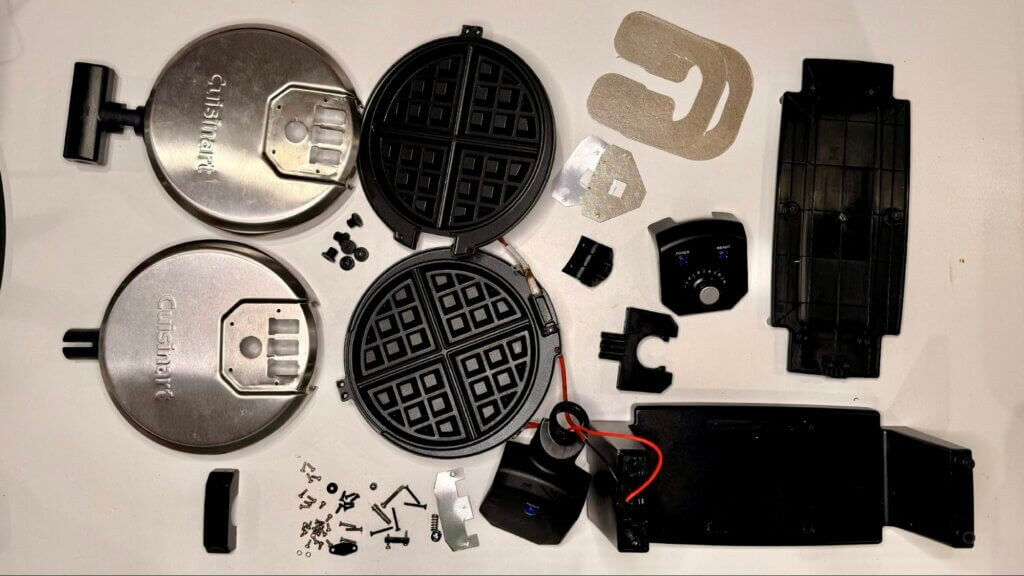
My Cuisinart WAF-F30 finally gave up. Not the heating elements, not the electrics — just a cracked plastic housing, likely from years of UV exposure and one too many collisions with the stand mixer. Before it hit the trash, I did what any engineer would do: I grabbed a screwdriver.
What I found inside wasn’t just a lesson in small appliance design. It was a reminder of something we’ve largely forgotten in the age of microcontrollers.
No brains required
I expected to find at least a simple PCB, maybe a relay, a basic controller, something with a chip on it. Instead, I found a fully analog circuit that would’ve made sense to an engineer in 1955.
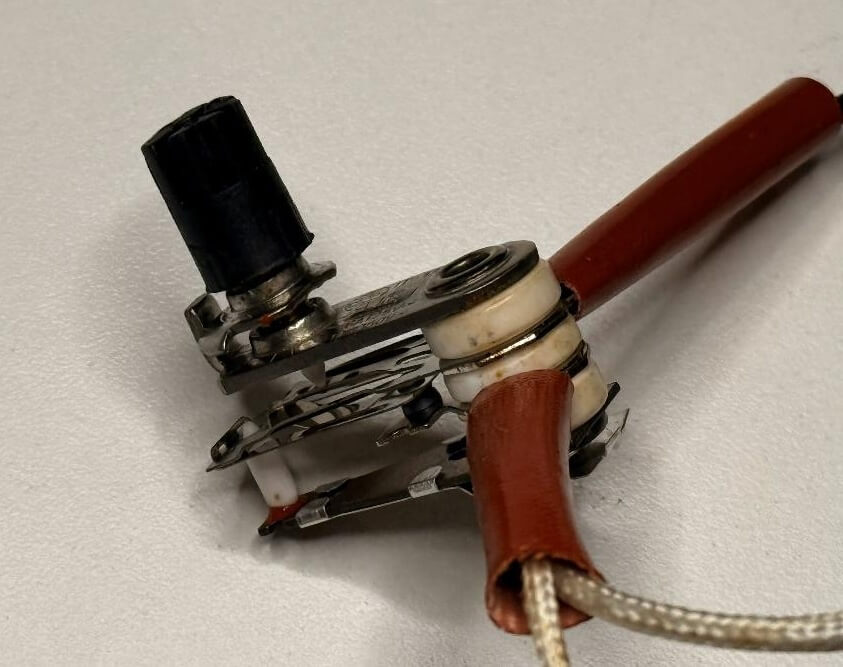
The heart of the system is a bimetal switch. When the switch is open, line voltage flows directly to the cal rod heating elements, cooking the waffle and illuminating a red neon indicator. As the griddle heats up, the bimetal element deforms until it closes the switch, breaking the heater circuit and completing the path to a green “ready” light.
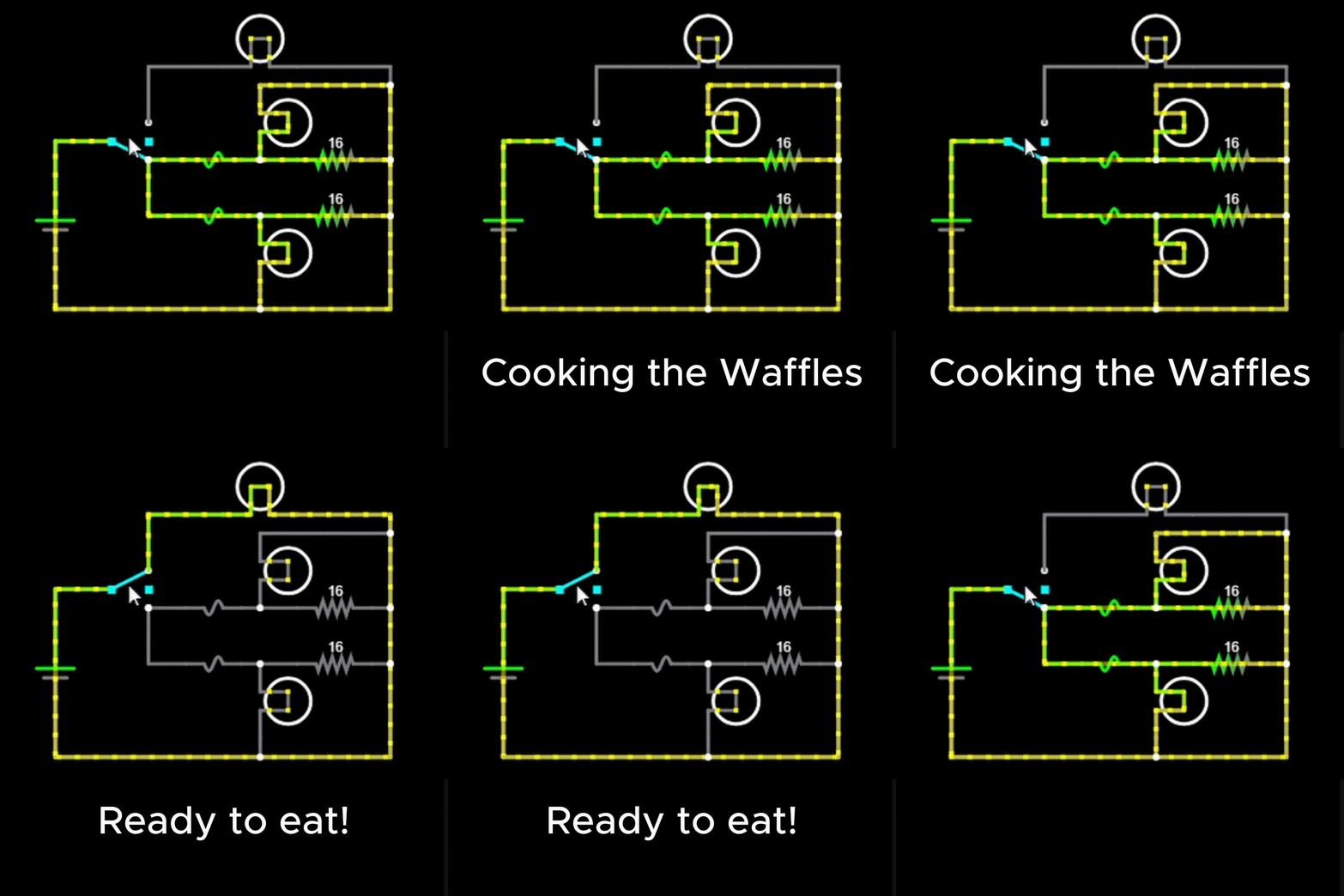
That’s it. No microcontroller. No firmware. No logic beyond the physics of thermal expansion.
The browning knob? It’s mechanically coupled to a threaded shaft that applies preload to the bimetal element. Turn the knob, and you’re changing the temperature at which the switch trips. More preload means the element has to work harder to overcome it, which means a hotter griddle before you get the green light.
It’s elegant in its simplicity.
The thermal engineering is smarter than it looks
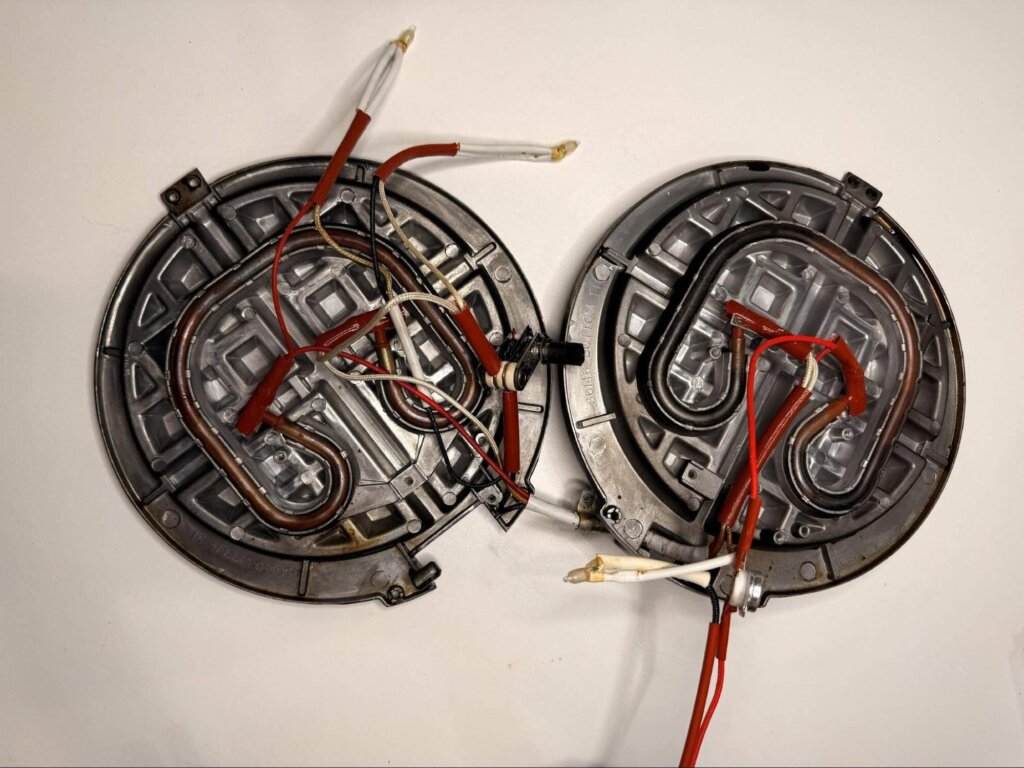
Most people assume waffle makers are cast iron. This one isn’t — it’s cast aluminum, and that’s a deliberate choice.
The bimetal switch isn’t measuring the waffle’s temperature. It’s measuring the back of the griddle. For this control scheme to work, the system needs to respond quickly. Pour cold batter onto the cooking surface, and you need the griddle temperature to drop fast enough that the switch resets and the heating cycle restarts.
Cast iron’s thermal mass would make the system sluggish. Aluminum’s lower specific heat and higher thermal conductivity give you a snappier feedback loop. The griddle heats fast, cools fast, and the simple control circuit can actually keep up.
There’s also a practical durability argument. Cast iron demands maintenance: seasoning, careful cleaning, vigilance against rust. Aluminum shrugs off neglect. It’s corrosion-resistant, chemically stable, and forgives the kind of casual abuse a kitchen appliance endures.
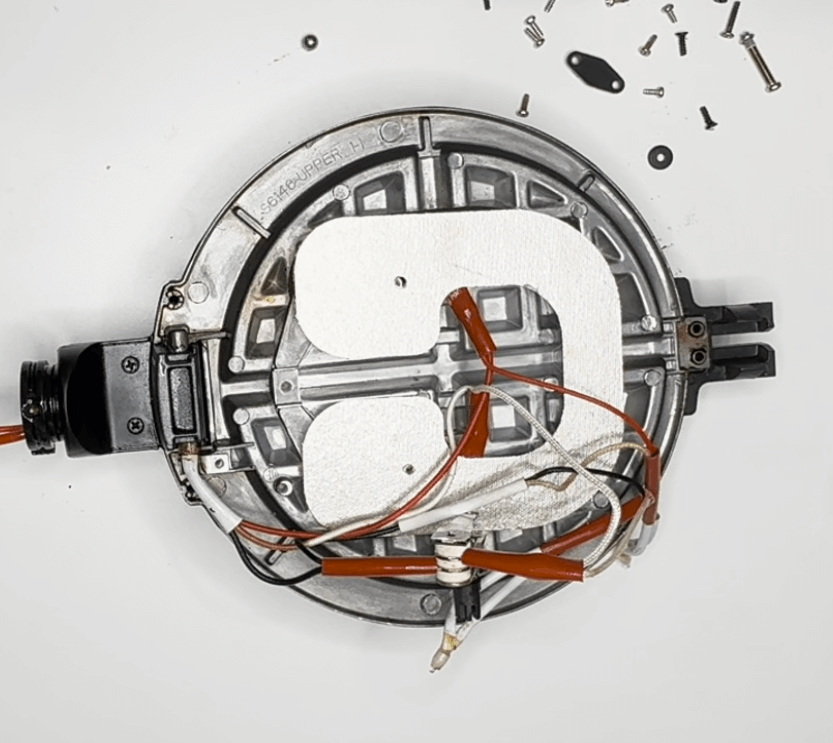
The cal rod heaters are press-fit into channels cast directly into the aluminum plates. Behind them, paperboard-based reflective heat shields direct radiant energy toward the cooking surface rather than the outer housing. It’s not sophisticated, but it’s effective.
The hinge is quietly brilliant
Waffle makers live and die by their hinge feel. A sloppy pivot makes the whole product feel cheap, even if the waffles are perfect.
Cuisinart’s solution here is clever. The actual rotation happens in a groove near the handle, far from the hinge hardware. The hinge itself only needs to loosely align the upper and lower halves. Fine positional control comes from a rotating slot formed by the plastic housing surfaces.
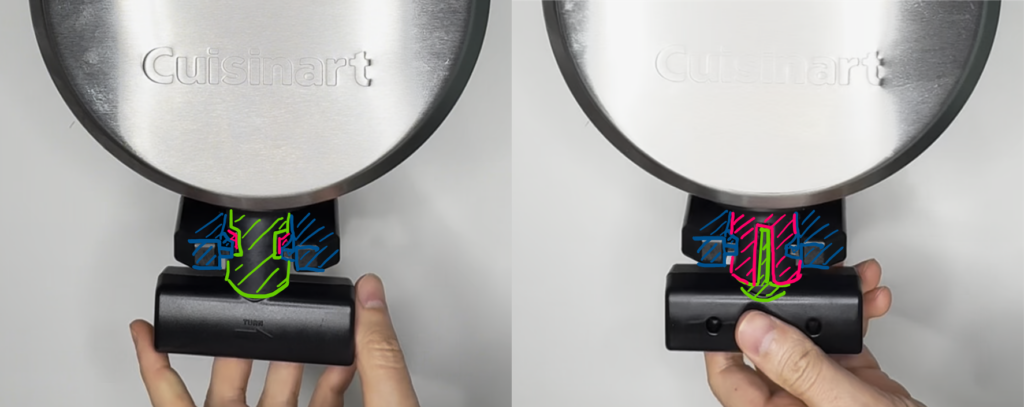
This geometry does two things. First, it isolates the user experience from tolerance stackup at the hinge. Small manufacturing variations in the pivot hardware don’t translate to wobble at the handle. Second, the slot geometry locks the lid shut when the unit is flipped for cooking (right image, above), but allows easy opening when upright (left image, above).
The result is a $40 appliance that doesn’t feel like a $40 appliance.
Where analog falls short
For all its elegance, the bimetal switch has limitations.
The control loop doesn’t know what temperature the griddle was at when you started. If you pour batter onto a fully preheated surface, you get one cook time. If the griddle was still warming up, you get a different one. The physics are deterministic, but the user experience is inconsistent.
This got me thinking about minimal upgrades. A 555 timer in monostable mode with an NTC thermistor and a potentiometer could address this without jumping to a full microcontroller. The classic timing formula is t = 1.1 × R × C. If you make R a series combination of a fixed resistor, a user-adjustable pot, and an NTC thermistor thermally coupled to the griddle, the time constant automatically compensates for starting temperature. Cold griddle means higher thermistor resistance, longer cook time. Hot griddle means lower resistance, shorter cook time. The pot lets you bias the whole curve for your browning preference.
The trigger mechanism is already built into the product. When you rotate the waffle maker to the cooking position, a limit switch at the detent could pull the 555’s trigger pin low, starting the one-shot. No behavior change for the user: Flip the waffle maker, the timer starts, and the relay energizes the heaters. When the timer expires, the heaters cut off and a “ready” indicator lights.
You’d still want safety margins. The adjustable bimetal switch wouldn’t stay, but you’d add a fixed thermostat set around 30°C above normal cooking temperature as a runaway prevention layer. The existing thermal fuses would remain as the last line of defense. We have a saying from our coffee maker work: Coffee makers do two things — make coffee and burn down houses. Waffle makers aren’t any different.
The real takeaway
We default to microcontrollers now. In product development, it’s almost reflexive — drop in an Arduino or an nRF chip on day one, figure out the control logic later. The flexibility is seductive. You can tune behavior in firmware, add features, customize the user experience as the product evolves.
But once an MCU is in the design, it’s not coming out. You lose the discipline to think in analog. This teardown was a reminder to ask a harder question earlier: Why does this product exist?
If the answer is “to make consistently great waffles at a mass-market price,” then maybe the elegant solution isn’t more silicon. Maybe it’s a bimetal switch, some thoughtful thermal design, and a hinge geometry that took someone real effort to get right.
Sometimes the best engineering is knowing when not to add complexity.
Justin Riley is a product design engineer and a founder at product design and development firm Mango PD.
Informal is a freelance collective for the most talented independent professionals in hardware and hardtech. Whether you’re looking for a single contractor, a full-time employee, or an entire team of professionals to work on everything from product development to go-to-market, informal has the perfect collection of people for the job.