There’s no such thing as free work
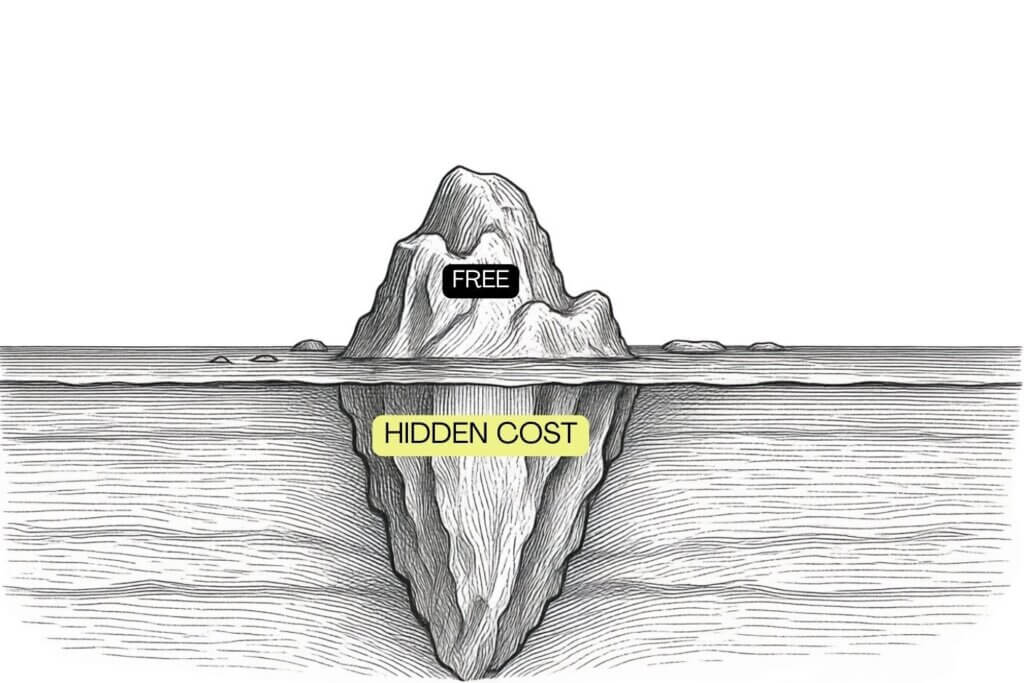
I’ve been helping folks design and develop hardware for the last 7 years at informal and have seen it all. We’ve worked with bootstrapped founders, using their hard-earned money to make their dreams a reality. We’ve worked with series A startups fresh off a round and with ambitious plans. And we’ve worked with large corporations that have legal teams seemingly larger than our entire freelance network. Strangely, I’ve seen the same mistake made regardless of company size: They fall into the trap of “free work.” Let’s cut to the chase — there’s no such thing as free work, and you’ll pay for it in some way or another.
There are a few major types of “free work” I’ve seen:
- Manufacturing teams offering free design services
- Clients offering equity in exchange for massively discounted rates
- Using a “buddy” who can do the work for you
They’re all equally tempting. Designing hardware is an expensive and time-consuming endeavor. To use a generic analogy, it’s a marathon and not a sprint. It’s common to rack up a bill of $150,000 or more across the first year of development before you ship your first product, and that doesn’t include the cost to manufacture the product. So, when you hear an offer for “free work,” of course it sounds amazing! What’s the worst that can happen? Let’s dig in.
Case 1: Free design services
I’ve seen this one the most. We’ll quote on a project for a client looking to design custom hardware and later hear back that a factory offered to do the design for free. We cost money, and they don’t! It’s easy math, and we end up not working together. Sadly, we often get an email months or years later asking for us to help redesign their product. So, what happened?
These factories usually have a team of in-house designers and engineers ready to help finalize the long tail of hardware development. They’re experts at mass production and typically receive a design that is 90% complete and help run it to the end. I love working with these teams, as they’ve seen it all and are very creative at solving manufacturing problems. However, there’s a big difference between optimizing something for manufacturing and designing a desirable product. I’ve seen product designs butchered in order to make assembly simpler, geometry changed without an understanding of the product function or aesthetics, and completely new and unreliable electronics swapped in to reduce costs.
Best case, the product looks and feels cheap. Worse case, the product is dangerous or functions poorly. This is typically when I get the second email asking for help. What we can do depends on how trapped the client is.
The factory dangles free engineering work as an incentive for a client to work with them in exchange for a guaranteed manufacturing contract. This may be an exclusivity deal based on quantity, years, or dollar values. Oftentimes, the design files are held hostage until this contract expires – preventing the client from being able to shop around the product with other factories. If you wish to leave early, you’ll have to pay for the design files and that may cost tens of thousands of dollars. Now you’ve lost both time and money! Sometimes, clients may ditch their vendor entirely and come to us to redo the work that was lost, so we’re back to square one. It’s painful to witness and entirely avoidable.
Another situation I’ve seen a few times is more of a bait and switch issue. The “A team” will be present for the design kickoff and upfront engineering. Soon, the B or C team takes over and things start falling through the cracks. Context is lost, designs are compromised, and quality takes a hit. The A team can’t keep working on your project as they’re needed to win another client. The cycle continues.
If you’re considering working with a factory in an engagement like this, double-check your contracts! Make sure you’re looped into each and every change from the design you’ve sent their way. Review all prototypes and test them prior to kicking off tooling. Ensure the engineering team understands the product function, user, and market needs. Importantly, have an exit strategy in mind (contact us here).
Case 2: Equity vs money
We get asked about equity often by smaller founders. They’re passionate about their idea and feel like it’ll be the next big thing, and we want to help them get there. When we discuss rates, we’re asked if we can lower them in exchange for equity, and my answer is almost always a no. Founders hope that dangling equity may be an incentive for contractors to become more passionate about ensuring the success of the company, and also help to reduce the overall cost of working together. This rarely works well, however.
The main issue here comes down to psychology. Unfortunately, contracting can be a feast or famine industry, and we’ve seen that the lowest paying projects receive the least amount of attention. Cash is king here, and projects on equity tend to get placed on the back burner. The result may be lower quality or slower timelines, which nobody wants. I’ve fallen victim to this on both sides – recognizing that my lowest paying clients tend to get the lowest priority, and seeing an equity-only project of my own slow down due to other personal or work commitments from the team. Who can blame them? I’m asking for real free work in exchange for theoretical money later. They’re crazy to have accepted this in the first place (and that’s why I love them), and I understand things will take longer.
If you do offer equity to contractors and freelancers, expect things to lower in priority. Plan ahead for it, and know that’s the price you’re paying for discounted rates.
Case 3: “I’ve got a buddy”
We’ve all got buddies, and they’re great. They can help in a pinch and sometimes are the exact person you need to help with your project. Oftentimes, I’ve realized these buddies may be overextending in order to learn on the job or maintain a good relationship. Sometimes, their skills are tangentially related to the real expertise needed and they may lead you down the wrong path. We’ve had to redo entire PCB schematics, rewrite code bases, or remodel full enclosures due to these buddy projects. Your friend who creates awesome interactive art for Burning Man probably doesn’t possess the same skillset required to create robust consumer electronics firmware with OTA updates. Your neighbor who designs the internal systems for MRI machines may not be the best person to use for a customer-facing device.
If you’re lucky enough to have buddies in this industry, know their strengths and weaknesses and when to hand things off to a team with deeper experience. Make your prototypes with them and iterate! Have a beer or two and enjoy how magical it is to make new things with friends (it rocks). At the same time, know that making things for mass production requires proper experience and the correct decisions made during the early stages of the design. It’s not uncommon to have to take a step backward and transition over from hand-soldered development kits and 3D-printed enclosures over to custom circuit boards and injection-molded parts. Make that jump at the right time to save time and money and heartbreak.
informal is a freelance collective for the most talented independent professionals in hardware and hardtech. Whether you’re looking for a single contractor, a full-time employee, or an entire team of professionals to work on everything from product development to go-to-market, informal has the perfect collection of people for the job.